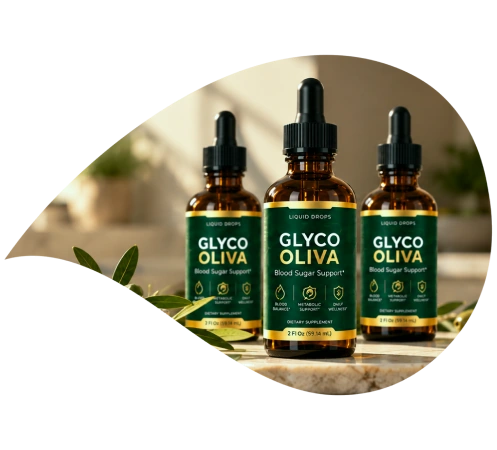
GlycoOliva is a liquid dietary supplement sold in two, three and six-bottle packages. Its formula combines chromium picolinate with a proprietary blend, and its main appeal is straightforward: drops instead of capsules, a daily routine and a lower price per bottle when you buy more.
A useful GlycoOliva review should answer more than whether the bottle looks good. You need to know what is in it, what the research can support, how much you will actually pay and what happens if you want a refund. Those questions deserve separate answers.
This review examines the formula and buying details. It is not a personal trial, a laboratory analysis or a collection of independently verified customer results. There is no customer star score here because a credible rating needs a traceable basis.
What GlycoOliva is designed to fit into
The product is presented as an addition to a daily metabolic wellness routine. That puts it alongside ordinary habits rather than above them. Buying a supplement should not mean putting meals, prescribed care or medical appointments on hold.
The liquid format will appeal to some adults who dislike capsules. That is a practical preference, not evidence that the formula works faster or produces a larger effect. If you already find a measured liquid inconvenient, a dropper bottle may add another task instead of simplifying your day.
Start with the problem you want to solve. If the problem is swallowing tablets, format matters. If the problem is a high glucose reading, the next step is clinical assessment, not choosing the most attractive supplement package. The same bottle cannot answer both questions in the same way.
The formula at a glance
Six named ingredients are chromium picolinate, gymnema sylvestre, green tea leaf, grape seed, maca root and ginseng root. The product description also refers to a 200 mg proprietary blend containing 20 ingredients. That combined number is not the amount of each ingredient.
Read the full Supplement Facts panel before paying. Look for the serving size, chromium amount, full blend list and other ingredients. A photograph of the front label cannot answer questions about quantities or added ingredients. Ask the seller for a readable panel if the order page does not show one.
Our GlycoOliva ingredients guide explains how to compare the formula with research. Keep the label open while you read it. Matching a familiar ingredient name is only the first step; matching the dose and extract is a separate task.
What the chromium research means for buyers
Chromium is a mineral studied in relation to insulin action. The NIH chromium fact sheet discusses studies with differing results. That is a reason to read the evidence carefully rather than treat chromium as a guaranteed solution.
A supplement containing chromium is not automatically equivalent to the chromium preparation used in a trial. The amount, study population and length of use can differ. GlycoOliva also contains other ingredients, which makes a direct jump from a single-ingredient study even less reliable.
For your decision, ask a narrow question: does the available information justify this purchase at this price? A biological explanation can make a formula sound plausible while still leaving the practical question unanswered. Plausibility, measured benefit and value for money are three different things.
Botanical ingredients deserve the same scrutiny
Plant ingredients often feel familiar because their names also appear in teas, foods or traditional practices. A concentrated extract in a mixed supplement is a different purchase. The exact preparation matters, and a long list does not establish the strength of the finished product.
The NCCIH botanical safety resources are a useful starting point when you want to ask better questions. Take the actual product label to a pharmacist rather than asking whether herbs in general are safe. The answer needs to fit the ingredients and medicines in front of them.
Avoid counting every botanical as another proven benefit. Twenty ingredients do not mean twenty successful clinical trials of GlycoOliva. A shorter, clearer description is more useful than a long chain of claims that the finished formula has not demonstrated.
Customer feedback: what earns your attention
A useful customer account describes the order, arrival date, bottle condition and experience with support. Those details can help you evaluate the purchase process. A dramatic health claim is harder to interpret, particularly when the reviewer also changed food, activity or medicine.
The FTC guide to evaluating online reviews explains why appearance alone cannot establish authenticity. A neat portrait, a first name and a badge do not let you independently check a purchase. This site therefore leaves the supplied testimonial portraits out.
Read positive and negative accounts with the same standard. Specific detail is useful; certainty without supporting information is not. Our customer reviews and complaints guide shows how to separate delivery concerns, service problems and health claims without turning one experience into a verdict about everyone.
The package prices and real upfront cost
Two bottles cost $158, with $9.99 shipping. That makes the listed subtotal $167.99 before any applicable tax. Three bottles cost $207 with free US shipping. Six bottles cost $294 with free US shipping. These are package totals, not instalment amounts.
The six-bottle package costs $49 per bottle, compared with $69 for three bottles and $79 for two. It has the lowest unit price, but also the highest amount committed at checkout. Both facts belong in an honest comparison.
If you have a strict spending limit, use the final checkout total as your decision number. Do not stretch your budget to claim a larger saving. Our price comparison walks through the differences without using an inflated comparison price or assuming you need the largest order.
The guarantee and the supply are different timelines
The seller presents a 60-day satisfaction promise from the original purchase date. The six-bottle package is described as a 180-day supply. Buying 180 days of product does not turn the promise into a 180-day return window.
Before ordering, read the actual return conditions. Find out how to request permission, where returns go, what must be sent and which costs are refundable. Keep a copy of the terms shown when you purchase rather than relying on a short badge.
Use the refund guide to build your order record. It is easier to make a clear request when the receipt, relevant dates and correspondence are in one place. A promise becomes useful when you understand the steps needed to use it.
Who should pause before placing an order
Pause if you cannot see the complete label, do not understand the serving instructions or have an unresolved question about your medicines. A discount does not solve any of those problems. Ask first and purchase only after the answer is clear enough for you.
Anyone using glucose-lowering treatment should have a clinician or pharmacist review the ingredients. NIH consumer information on chromium discusses interaction concerns. Do not use a supplement as a reason to reduce a medicine yourself.
A person who wants a confirmed treatment for a diagnosed condition needs evidence and care appropriate to that condition. A wellness supplement purchase is a separate choice. See our side effects and interactions guide before treating the absence of dramatic warnings in an advertisement as a safety assessment.
How to read a strong claim without getting pulled in
When you see a statement such as better energy or healthy glucose support, ask what was measured. Was it a feeling, a laboratory result or a purchase experience? If the answer is not clear, the claim is too broad to carry much weight in your decision.
Then ask whether the evidence concerns this exact formula. A research link can be real and still fail to support the sentence beside it. The title of a study is not enough; the ingredient, dose, participants and outcome must fit.
Our does GlycoOliva work guide examines that gap in more detail. It is possible to be interested in a supplement while refusing to accept claims that go further than the evidence. You do not need to choose between blind trust and a blanket accusation.
Compare GlycoOliva with another product on one sheet
If you are considering two supplements, use the same headings for both. Record the full label, disclosed individual amounts, format, total price, shipping and return terms. Leave a space blank when the information is missing. Do not reward the more persuasive page by filling its gaps with assumptions.
For example, one product might list the amount of each botanical, while another gives a combined blend weight. That is a transparency difference you can describe without declaring either product clinically superior. One might cost less upfront but more per bottle. That is a price difference, not an effectiveness ranking.
Add a final row for the questions you would bring to a pharmacist. If one formula cannot be assessed because the label is unreadable, that is a practical obstacle. Solve it before comparing benefit promises. A short, honest comparison sheet is more useful than a numerical score built from arbitrary points for ingredient count, packaging or the size of a discount.
Three reasons a positive review might still not fit you
First, the reviewer may have a different reason for buying. Someone who values a liquid format can be satisfied even without reporting a measurable health change. If you expect a medical result, their convenience review answers a different question.
Second, their budget may be different. A six-bottle package might be comfortable for one buyer and an unnecessary commitment for another. You cannot borrow someone else’s financial comfort simply because they describe the offer enthusiastically.
Third, their medicines and health circumstances may differ. A supplement that a reviewer tolerated is not automatically suitable alongside your treatment. Personal experience is most useful when the relevant details are understood, and even then it cannot replace professional advice.
Use positive accounts to identify questions rather than to close the decision early. Ask what the person liked, whether that feature matters to you and whether any claim needs stronger evidence. This approach lets you appreciate useful feedback without allowing it to make a decision on your behalf.
A final checklist you can actually use
Before paying, answer five questions in your own words. What is the product? Why are you considering it? What is the complete cost? What does the return promise require? Which health or label questions remain open? If an answer is still just a slogan, go back to the relevant section.
A prepared buyer might write: I prefer a liquid, I have shown the complete panel to my pharmacist, I understand the two-bottle subtotal and I have saved the policy. That is a clear record of a decision. It is different from saying the product must work because the reviews look good.
If you decide against buying, keep the useful information rather than restarting the same search the next day. If new evidence or a changed label appears later, you can revisit the specific point that matters. There is no need to keep reading increasingly enthusiastic pages until one persuades you to ignore a question you already identified.
Decide which unanswered question matters most
Not every gap has the same importance. If you do not like the typography of an order page, that may be a preference. If you cannot obtain the full ingredient panel while taking several medicines, that is a material obstacle. Rank the questions by their relevance to your actual decision.
This helps you avoid spending another hour comparing small package savings while a larger issue remains unresolved. Ask the seller for product facts, ask a pharmacist about suitability and use the current checkout for the transaction total. Each source has a different job.
Once the important questions are answered, make the decision and keep your record. If they remain unanswered, pause without feeling that more browsing must eventually produce permission to buy. Research is useful when it clarifies the choice. It is less useful when it becomes a search for a reassuring sentence that lets you overlook the information you still need.
A straightforward way to reach a decision
Write down your budget, the reason you are considering GlycoOliva and the questions that remain unanswered. Check the full label and current checkout. If a health professional needs to assess the formula for you, do that before making the purchase.
Next, compare the smallest acceptable spend with the larger packages. The right quantity is the one you can afford and reasonably intend to use, not the one with the strongest sales wording. Save the return policy before you leave the order page.
You can return to the GlycoOliva homepage for the three package cards. If the formula, cost and terms all fit, the seller’s website is the place to confirm the final order. If they do not fit, leaving without buying is a complete decision too.
Review the current offer.
Compare package quantities, check the complete label and read the seller’s current terms before paying.
Visit Official Website ↗Back to the package comparison