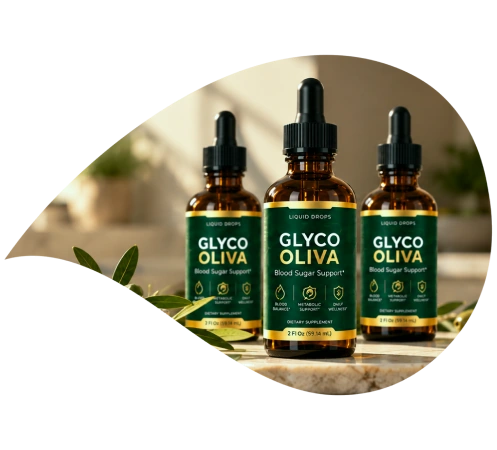
The GlycoOliva ingredient list deserves more attention than the front of the bottle. This liquid supplement combines chromium picolinate with a proprietary blend. Named botanicals include gymnema sylvestre, green tea leaf, grape seed, maca root and ginseng root.
GlycoOliva lists 20 ingredients within a 200 mg proprietary blend. That does not mean each ingredient supplies 200 mg. It also does not tell you whether the amount of a particular extract matches the amount used in a published study.
Use this guide to read the formula with specific questions in mind: what is included, how much is disclosed, what preparation is used and whether the blend fits your medicines and health history. Those questions produce a better purchase decision than simply counting plant names.
Start with the serving size
An amount on a supplement label has meaning only when you know the serving it describes. Before comparing two products, check whether one lists an amount per millilitre, per serving or per full daily intake. Otherwise, the numbers can look comparable while representing different quantities.
GlycoOliva’s stated directions are 1 mL twice daily. Read the label on the bottle you receive and confirm the measurement with the seller if the panel is unclear. Do not guess a dose from a promotional description of droppers.
The NIH guide to supplement labels explains the purpose of the Supplement Facts panel. For a detailed routine discussion, see our dosage guide. The label is the starting document; an article should help you understand it, not quietly replace it.
Chromium picolinate: name, amount and context
Chromium picolinate identifies a particular form of chromium used in supplements. Look for the declared chromium amount and unit, usually written in micrograms. Do not confuse a mineral’s stated amount with the weight of the compound that carries it.
The NIH professional chromium overview is useful for understanding the research context. It covers differing study findings, so an ingredient mention should not be stretched into a guarantee about glucose readings.
A good question for the seller is simple: can you provide a clear, current photograph of the complete label? A good question for your pharmacist is different: is that amount and combination suitable alongside what I already take? One concerns product information; the other concerns your circumstances. You need the right person to answer each.
Gymnema sylvestre: research needs a matching preparation
Gymnema is frequently discussed in relation to blood sugar. A systematic review indexed in PubMed examined human studies, but results from varied studies cannot establish the effect of an undisclosed amount within GlycoOliva.
Keep three details separate: the botanical species, the type of extract and the actual dose. A study of one preparation does not become a trial of every bottle containing the same plant name. A proprietary blend can make dose comparison particularly difficult.
If a sales page links to gymnema research, read whether the participants took a standalone ingredient or a combination. Then look back at the GlycoOliva label. If you cannot make the match, keep the research as background. Do not treat the link itself as confirmation that the finished supplement produces the reported outcome.
Green tea leaf: a familiar plant in a different format
Green tea in a cup and green tea extract in a supplement are not interchangeable descriptions. With an extract, the concentration and composition matter. Ask whether the product discloses relevant extract details rather than assuming a familiar plant name answers the safety question.
NCCIH’s green tea resource discusses both research and safety, including uncommon reports of liver injury associated with some extract products. That does not give a measured risk rate for GlycoOliva. It does show why concentrated ingredients deserve attention.
If you already use another green tea supplement, include it in the list you show your pharmacist. The total routine matters more than whether each separate bottle looks modest. Avoid combining several formulas simply because they appear in different categories such as energy, metabolism and daily wellness.
Grape seed extract: polyphenols are not a finished-product result
Grape seed extract contains plant compounds commonly described as polyphenols. That gives the ingredient a research background; it does not answer whether GlycoOliva changes a particular health outcome at its supplied dose.
The NCCIH grape seed overview describes a research picture that depends on the outcome and study. Do not borrow a finding about one outcome and attach it to another. A discussion of blood pressure, for example, is not automatically evidence about glucose control.
For your label check, record the ingredient exactly as written. If an extract ratio, standardization or amount is missing, mark it as an unanswered question rather than filling the gap yourself. A precise list of unknowns helps you compare products more honestly than a table that gives every ingredient an impressive-sounding benefit.
Maca root: separate inclusion from a proven purpose
Maca root appears among the named GlycoOliva botanicals. Its presence tells you something about the composition, but not the amount delivered or the benefit you will receive. Do not assign it a glucose-lowering effect merely because it appears in a metabolic wellness formula.
An ingredient can be used in wellness products for several reasons, including a manufacturer’s overall formula concept. That is different from having direct evidence for the exact combination. Ask for research that matches the claim being made, not simply research in which the plant’s name appears.
If maca is the main reason you are considering GlycoOliva, compare how much information this blend gives you with the information you would want from any maca product. A mixed formula should still be understandable. You do not have to accept less clarity because several ingredients share the same bottle.
Ginseng root: the species is part of the name
Ginseng is a broad everyday name. The exact botanical identity matters when you compare a label with research. Do not assume every product using the word ginseng contains the preparation described in a study of Asian ginseng.
The NCCIH Asian ginseng page describes conflicting evidence on blood sugar. If the GlycoOliva panel does not specify enough detail to make a match, ask the seller for clarification. The answer should identify the product, not offer another general benefit statement.
A clear response would help you understand the species, plant part and extract. An unclear response would only repeat that ginseng is a popular wellness ingredient. Popularity is easy to establish; suitability for your routine requires different information. Keep those two standards apart when comparing supplement descriptions.
What a proprietary blend does and does not tell you
A proprietary blend groups ingredients under a combined weight. It can list the components without showing the separate amount of each. The NIH supplement terminology dictionary helps explain common label terms.
The total does not let you calculate each ingredient by dividing by the number of names. Twenty ingredients do not have to appear in equal amounts. A front-label botanical image also does not show where that ingredient sits within the blend by weight.
For buyers, the practical limit is straightforward: you may be unable to compare an individual ingredient dose with a trial. That does not prove the product is ineffective, but it limits the claims you can verify from the label. Our benefits guide explains how to keep those limits visible while considering the product’s intended role.
Read the other ingredients too
The ingredients outside the main blend can matter to your personal decision. Look for the carrier liquid, flavorings, preservatives and any allergen information on the current label. Do not infer their presence or absence from the bottle’s color or a description such as natural.
If you avoid a particular ingredient, ask a direct question using its exact name. A broad question such as is this clean leaves too much room for different meanings. Ask whether the current product contains the ingredient you need to avoid and request a written answer.
Keep that answer with your order details. If a later bottle has a different label, compare it again rather than assuming the formula is unchanged. Your previous purchase can be a useful reference, but it is not a substitute for checking the product actually delivered to you.
Bring a useful label to your pharmacist
A pharmacist can do more with a readable panel than with a list of advertised benefits. Bring photographs showing the full formula, serving directions and warning text. Include your prescription medicines, nonprescription products and other supplements in the same conversation.
The NCCIH discussion of drug-herb interactions explains why gaps in interaction research still exist. Missing information should prompt a question, not a confident assurance that every combination is harmless.
Ask what would make the product unsuitable, whether any monitoring needs discussion and who to contact if a problem occurs. Then decide whether the answers are clear enough to proceed. Our side effects guide offers a separate checklist so that the ingredient discussion does not stop at potential benefits.
Make a label question specific enough to answer
A useful message to the seller asks for one identifiable fact. For example: please send the current Supplement Facts panel and confirm whether the 200 mg blend amount is listed per serving or per daily intake. That question can be answered directly with a label image and a clear explanation.
A less useful message asks whether the formula is powerful or high quality. Those words invite another promotional description. Replace them with questions about the actual product: which species is used, what amount is disclosed and where the relevant information appears on the label.
Keep the reply in its original form. If it answers only part of the question, ask the remaining part without changing the subject to discounts or bonuses. The aim is to understand the formula. A package offer can wait until the label information is complete enough for your decision and for any professional who needs to review it with you.
Do not confuse olive imagery with a disclosed ingredient
GlycoOliva’s name and visual design may bring olives to mind. Branding is not a substitute for the ingredient panel. Do not assume that a particular olive compound, oil or extract is present simply because leaves appear beside the bottle.
The same principle applies to every botanical photograph on a product page. Images help readers recognize a theme, but the panel determines what the manufacturer actually lists. If a specific ingredient is the reason you are interested, find it by name and check how it is described.
Ask the seller to resolve a mismatch between an image and the written panel. Do not quietly add a substance to your own formula summary because it seems implied by the brand. This keeps your decision tied to the product rather than an association created by the packaging. It also gives your pharmacist a more accurate starting point than a list assembled from pictures.
Compare an extract claim without doing imaginary arithmetic
Suppose a different product advertises an extract ratio and GlycoOliva lists only a botanical name. You cannot reliably convert that difference into a potency ranking without knowing what the figures mean and whether the preparations are comparable. More impressive-looking arithmetic can still produce a meaningless comparison.
Record the information exactly as supplied. Then ask whether it allows the relevant dose and composition to be compared with research. If not, state the limit plainly. A blank is more accurate than an invented equivalent amount.
Avoid dividing a blend equally among its components or estimating botanical amounts from the position of promotional headings. The front page is arranged for communication, not as a measurement table. Where label details are incomplete, the correct next step is clarification. It is not a more elaborate calculation built on an unknown starting point. Keeping that boundary clear makes your ingredient comparison both simpler and more reliable.
Make the ingredient information earn its place in your decision
Once you have the label, summarize it in plain words. You should be able to say what the supplement is, what key amounts are disclosed and which questions remain open. If that summary still depends on a string of slogans, you need better information.
Next, connect the formula to your reason for buying. Preference for liquid drops is a practical reason. Expecting a guaranteed change in a medical test is a much stronger claim and needs a much stronger evidence base.
Return to the GlycoOliva homepage for the product overview, or read the evidence guide before comparing package prices. The ingredient list should help you decide whether to buy at all before it helps you choose how many bottles to buy.
Review the current offer.
Compare package quantities, check the complete label and read the seller’s current terms before paying.
Visit Official Website ↗Back to the package comparison